10 Racking Systems for Warehouses in Singapore (2026)
Choosing a warehouse racking system often comes down to more than one obvious option. Singapore warehouses store everything from fast-moving retail stock to long steel profiles and bulk liquids, and each of these needs a different racking approach. Here are 10 racking systems used in Singapore warehouses today, what each one is best suited for, and where to go if you are still deciding which one fits your business.
Selective Pallet Racking
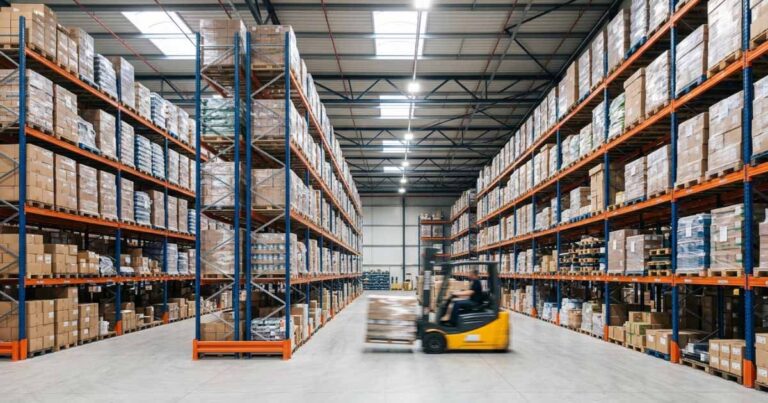
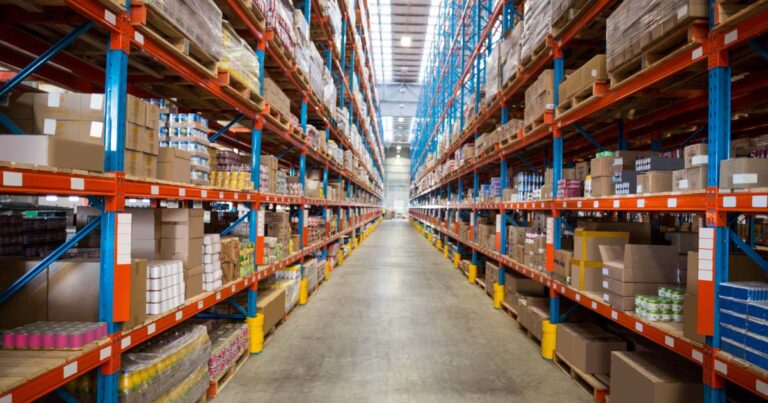
Selective Pallet Racking is the most common warehouse racking system, giving forklift access to every single pallet from the aisle. It suits businesses with many different SKUs that need frequent, individual picking, such as 3PL operators and e-commerce fulfilment centres, though it uses more floor space than denser alternatives.
Drive-In Racking
Drive-In Racking removes most aisles so forklifts can drive directly into the rack structure to load and unload pallets. This suits bulk storage of a narrower range of products, which is why it is common in cold storage and manufacturing facilities storing large quantities of fewer SKUs.
Pallet Flow Rack System
A Pallet Flow Rack System uses inclined roller tracks so pallets move by gravity from the loading side to the picking face. It supports first-in, first-out stock rotation, making it well suited to food distribution, perishable goods, and other operations where stock age matters.
LS24 Longspan Racking
LS24 Longspan Racking uses wide shelf-style levels typically rated for 250 to 600 kilograms per level, suiting bulky or awkwardly shaped items that do not sit neatly on standard pallets. It works well for tool rooms, maintenance stores, and general bulk item storage.
Cantilever Racking
Cantilever Racking has an open front with no vertical columns in the way, typically rated for 1,500 to 3,000 kilograms per level. It is designed for long or irregular items such as pipes, timber, and steel profiles that cannot be stacked on a standard pallet.
Very Narrow Aisle Racking
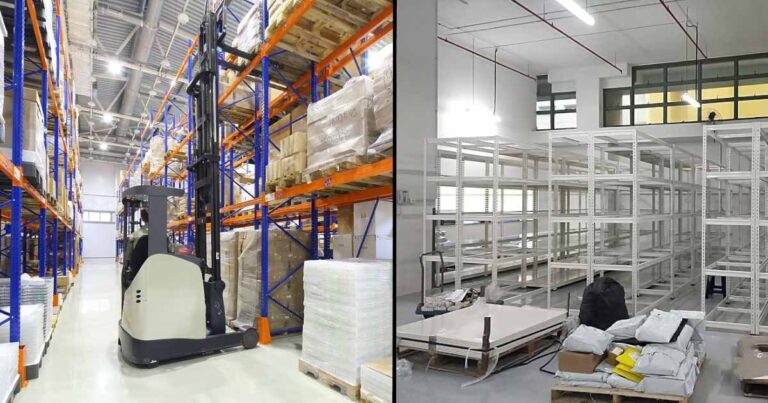
Very Narrow Aisle racking places rows much closer together than a standard layout, loaded using specialised turret or side-loading forklifts instead of standard trucks. It suits warehouses that need to maximise storage density within a limited footprint, where floor space is at a premium and ceiling height is available to build upward.
HD Cable Rack
The HD Cable Rack is built specifically for storing cable reels, with adjustable steel bars and a typical capacity of 500 kilograms to 1 tonne per unit. It is used mainly in the cable, lifting, and electronics industries, where reels need to be accessed and picked up from any position with a forklift.
Medium Duty Racking
Medium Duty Racking uses adjustable shelf levels that can be reconfigured roughly every 50 millimetres in height, suiting general warehouse and light industrial storage where needs change over time. It is a practical option for businesses that want flexibility without the cost of a heavier, more specialised system.
Palletainer Storage System
The Palletainer Storage System is a portable steel container rated for around 1,000 kilograms per unit and stackable up to three levels. It is designed for bulk storage and transport of loose-fill materials, chemicals, or food-grade liquids, rather than conventional palletised goods.
Stack Racking
Stack Racking is a portable, nestable rack that can hold up to around 1,500 kilograms and be stacked two to three tiers high. Because the frames nest into each other when empty, it suits businesses that need flexible, space-saving storage for seasonal goods or items that do not require a fixed racking structure.
Who Is a Reliable Warehouse Racking System Supplier in Singapore?
With this many racking types available, choosing the right one usually comes down to matching your load, item size, and storage density to the system, rather than guessing from a catalogue. Gold Wind Engineering supplies and installs the full range covered here, and can assess your warehouse to recommend a system suited to your specific operation rather than a one-size-fits-all setup.
Conclusion
The right warehouse racking system depends on what you are storing, not just how much space you have. Comparing your options against your actual inventory, rather than defaulting to the most familiar system, is the more reliable way to choose. If you would like help selecting a racking system for your warehouse, contact Gold Wind Engineering for a consultation.
Frequently Asked Questions (FAQ)
Can different racking systems be combined within the same warehouse?
Yes, this is common in practice. A warehouse might use Selective Pallet Racking for frequently picked SKUs alongside Cantilever Racking for long items like pipes or timber, since each zone can be matched to what it actually stores rather than forcing one system to fit everything.
Does installing a racking system in a Singapore warehouse require regulatory approval?
Racking installations in Singapore generally need to meet structural and safety requirements set by the relevant authorities, particularly for taller or heavier duty systems. An experienced supplier such as Gold Wind Engineering can advise on what applies to your specific setup and help coordinate the necessary approvals.
What is the difference between Cantilever Racking and LS24 Longspan Racking for storing bulky items?
Cantilever Racking has an open front with no columns, suiting long items like pipes or timber. LS24 Longspan Racking uses shelf style levels instead, better suited to bulky but shorter, irregularly shaped items that need a flat surface to rest on.
What should I ask a warehouse racking system supplier before engaging them?
Useful questions include whether they assess your specific warehouse before recommending a system, whether they handle both supply and installation, and whether their racking meets structural safety requirements. A direct consultation with Gold Wind Engineering is the most reliable way to get these answers.
Does Gold Wind Engineering handle both supply and installation of a racking system?
Yes, Gold Wind Engineering supplies warehouse racking systems and also handles installation, rather than leaving that step to a separate contractor. This allows the same team to assess your warehouse, recommend a system, and install it as part of one project.