Warehouse Pallet Rack vs Shelving: Which Storage System Is Right for Your Business?
Many small and medium businesses store more than one type of inventory under the same roof, from full pallets of stock to smaller items that staff pick by hand. Choosing between a pallet racking system and shelving is less about how big the warehouse is and more about what is being stored inside it, and how often it moves.
What Is the Difference Between a Pallet Racking System and Shelving?
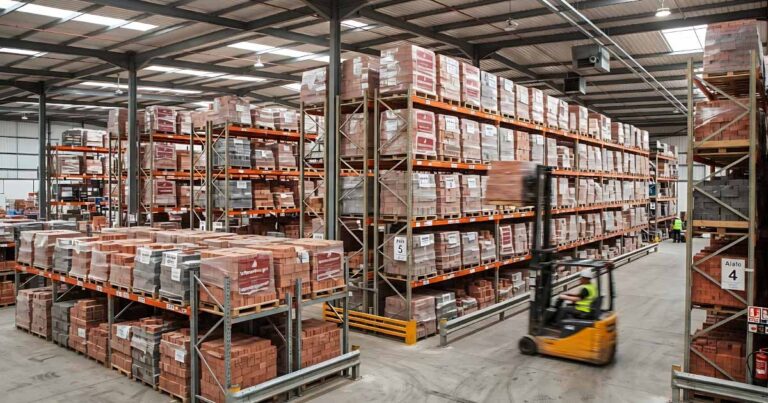
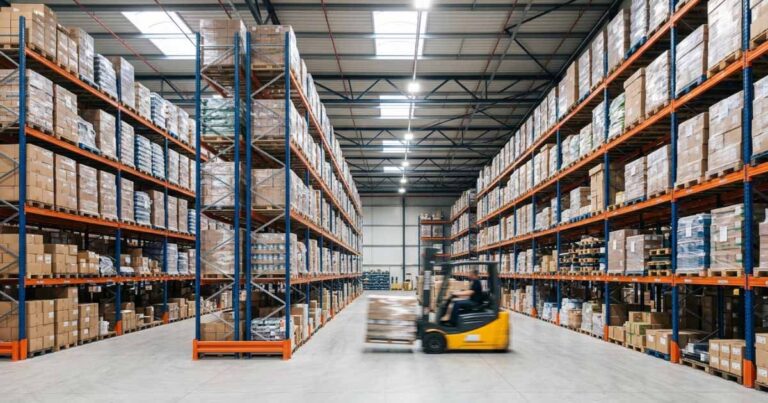
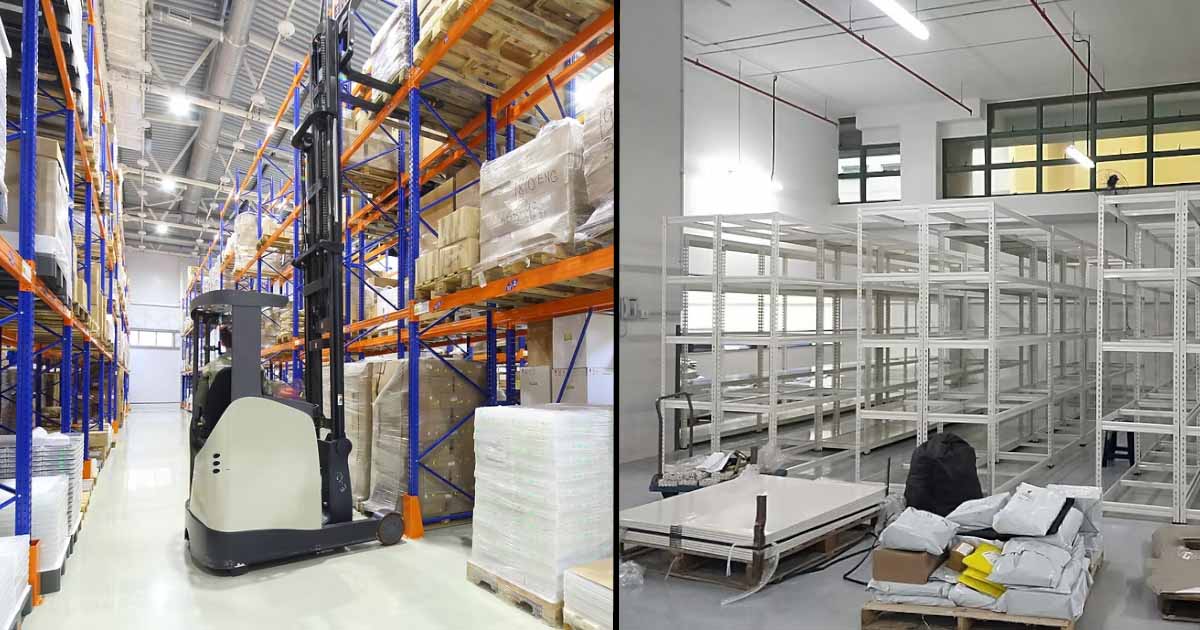
A pallet racking system is built to hold palletized goods that are loaded and retrieved with a forklift or similar equipment, so it can carry heavier weights per level and reach greater heights. Shelving, by contrast, is designed for items that staff load and pick by hand, such as loose boxes, cartons, or smaller parts, without needing mechanical lifting equipment. Neither is inherently better. They are built for different jobs, and many businesses end up using both in different zones of the same warehouse.
How Much Weight Does Your Storage System Need to Hold?
Weight is usually the first factor to check. If goods arrive and move as full pallets, a pallet racking system is generally the safer and more practical choice, since it is engineered to carry that concentrated load level after level. If the inventory is made up of individual items, small cartons, or parts that are well under pallet weight, lighter shelving such as Boltless Shelving can usually carry the load just as safely, at a lower cost per storage position.
How Big Are the Items You’re Storing?
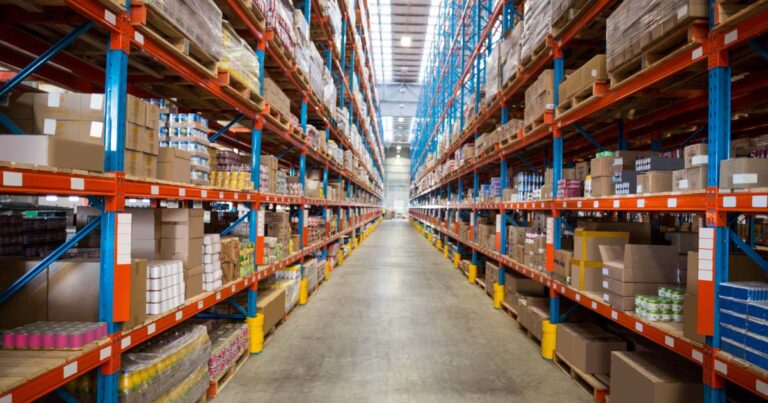
SKU size matters as much as weight. Full pallets and bulky cartons are usually stored and moved as single units, which points toward a pallet racking system with wide bays sized for pallet dimensions. Smaller, individually packed items are easier to store and retrieve on shelving, where staff can see and reach several SKUs at once without shifting a pallet out of the way first. A business that mostly handles small parts or retail-sized units may find shelving covers most of its needs, with a smaller pallet racking system reserved for bulk stock or incoming deliveries.
How Quickly Does Your Inventory Move?
Throughput, or how often stock is picked and replaced, also shapes the decision. Fast, frequent picking of smaller items tends to favour shelving, since staff can access multiple SKUs quickly without forklift movement. Slower moving bulk goods, or stock that is picked in full pallet quantities, tend to suit a pallet racking system better, since it is designed around pallet-level access rather than individual unit picking. A warehouse with both patterns, high-turnover small items and slower bulk stock, often benefits from combining both systems rather than choosing only one.
How Do I Choose the Right Pallet Racking System for My Warehouse?
Start by separating your inventory into what moves as full pallets and what does not. For the palletized portion, look at the heaviest pallet weight you need to store, the height available in your warehouse, and how many SKUs need to stay directly accessible, since these determine whether a straightforward selective layout or a higher-density configuration suits you better. For everything that is not palletized, lighter shelving is usually more cost-effective and easier to reconfigure as your product range changes. Because floor load, aisle width, and racking height all affect the final design, it is best to confirm the exact specification with a supplier during a site assessment rather than estimating it in advance.
Comparing Gold Wind Engineering’s Boltless Shelving and Black Pearl Shelving
Not all lighter-duty shelving serves the same purpose. Gold Wind Engineering’s Boltless Shelving is built for general warehouse and distribution use, with a tool-free design that assembles and reconfigures quickly as storage needs change, making it a practical fit for the back-of-house storage areas of many SMEs. Our Black Pearl shelving, on the other hand, is designed for home and display settings, with a finished aesthetic and a lighter overall capacity across its shelves, suiting retail displays, showrooms, or office and reception areas rather than bulk warehouse storage. Understanding this difference helps avoid using the wrong shelving type for the job, in the same way that shelving itself should not be used in place of a pallet racking system for heavy, palletized goods.
| Storage System | Best Suited For | How It’s Loaded |
|---|---|---|
| Pallet Racking System | Heavy, palletized bulk goods | Forklift or pallet equipment |
| Boltless Shelving | General warehouse storage of smaller items | By hand |
| Black Pearl Shelving | Retail displays, showrooms, office storage | By hand |
Conclusion
There is no single right answer between a pallet racking system and shelving. The better approach is to match each storage system to what you are actually storing, checking load, SKU size, and throughput rather than guessing based on warehouse size. If you would like help assessing which storage system suits your business, contact Gold Wind Engineering for a consultation.
Frequently Asked Questions (FAQ)
Is shelving less safe than a pallet racking system?
Not inherently. Both are safe when used within their intended weight limits and item types. Shelving becomes unsafe mainly when it is overloaded or used for goods it was not designed to hold, such as full pallets, so matching the system to the load matters more than assuming one is safer.
What is the difference between Boltless Shelving and Black Pearl Shelving?
Boltless Shelving is built for general warehouse storage, with tool-free assembly suited to back-of-house use in many SMEs. Black Pearl Shelving is designed for home and display settings, with a finished look suited to retail or reception areas rather than bulk warehouse storage.
Can Boltless Shelving be used to store palletized goods?
Boltless Shelving is designed for individual items and smaller cartons that staff load by hand, not full pallets. For palletized goods, a pallet racking system is the safer, more practical choice, since it is engineered specifically to carry that concentrated weight safely.
Does the type of storage system I choose affect warehouse safety compliance in Singapore?
Yes, the storage system chosen should suit the load it carries and the space it is installed in, which is part of general warehouse safety practice in Singapore. Matching the system to your actual inventory, rather than adapting inventory to the wrong system, is the safer approach, and a supplier can advise on compliance specifics.
Where can I get a shelving system in Singapore for my SME?
Several suppliers in Singapore offer shelving alongside pallet racking, so it helps to work with one that can advise on both. Gold Wind Engineering supplies Boltless Shelving and other storage systems locally, and can be contacted directly to assess what suits your SME’s space and budget.