Steel Mezzanine Floor vs Concrete Mezzanine: Which Is Better for Singapore Warehouses?
Most warehouses in Singapore that add a mezzanine level choose a steel frame over a concrete one, and this is not simply a matter of preference. Steel generally wins out on build speed, how much it weighs relative to what it can carry, and how easily it can be changed later, which matters in a market where industrial space is leased rather than owned outright. This guide explains why, in plain terms, along with what to know about approval before you commit to either option.
Why Do Steel-Frame Mezzanines Dominate Singapore Warehouse Construction?
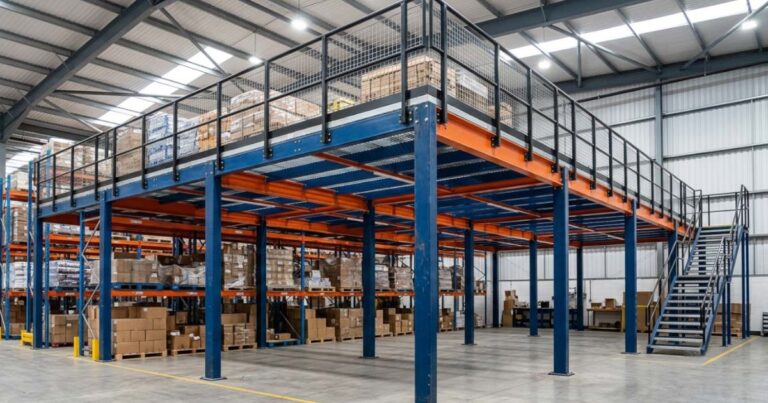
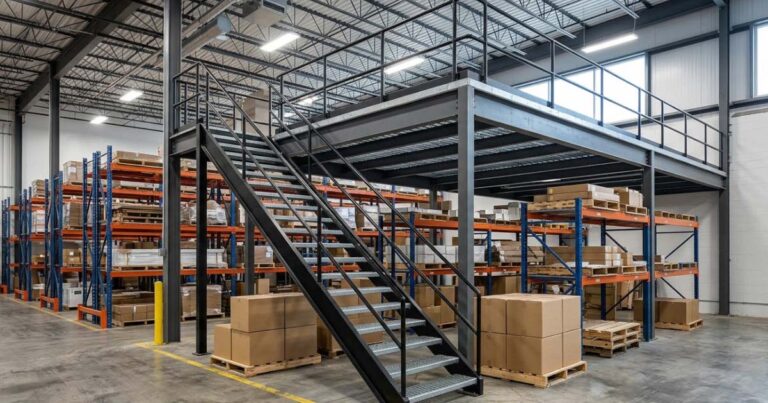
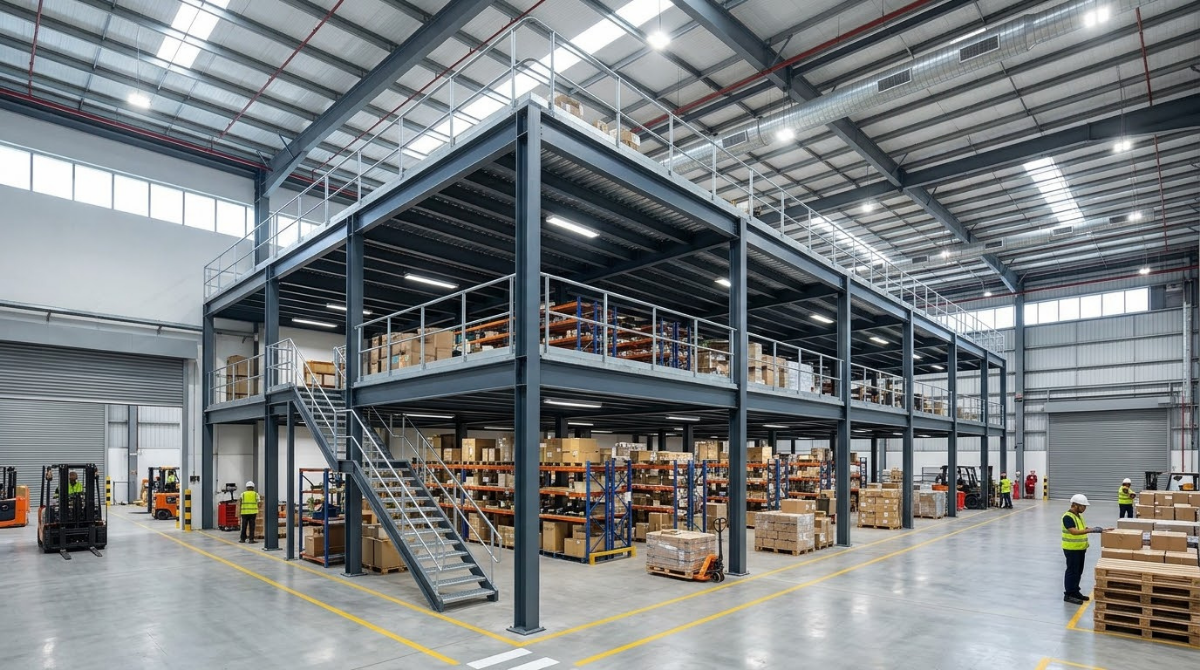
Steel-frame mezzanines are prefabricated off-site to a large extent, then assembled on-site using bolted or modular connections rather than wet construction methods. This generally makes them faster to build, lighter on the existing floor or building structure, and easier to adjust later than concrete, which is poured and cured on-site and becomes a permanent part of the building once set.
How Does Build Speed Compare Between a Steel Mezzanine Floor and a Concrete Mezzanine?
A steel mezzanine floor is typically measured in weeks, since prefabricated columns, beams, and decking are assembled on-site rather than built up from scratch. A concrete mezzanine generally takes considerably longer, mainly because of the time needed for formwork, reinforcement, pouring, and curing before the structure can safely bear load. For a warehouse that needs extra space without a long shutdown, this difference in build speed is often the deciding factor.
Does a Steel Mezzanine Floor Offer a Better Load-to-Weight Ratio Than Concrete?
Generally, yes. A steel mezzanine floor adds relatively little dead weight to the building’s existing structure while still supporting a significant storage or working load on top. A concrete mezzanine is considerably heavier per square metre simply as a structure, before any goods are even placed on it, which can be a real constraint in a building where the existing floor or structure was not designed to carry that much additional permanent weight.
Is a Steel Mezzanine Floor Easier to Reconfigure or Remove Than Concrete?
Yes, particularly with modular steel systems. Gold Wind Engineering’s Super Block Mezzanine Floor, for example, is a standalone system that does not require ground bolting or welding, so it can be dismantled, relocated, or reconfigured without the demolition work a concrete structure would need. This matters for businesses on a lease, since a steel mezzanine can generally move with the business rather than becoming a fixed cost left behind.
Does a Mezzanine Floor Need BCA Approval in Singapore?
In many cases, yes. A mezzanine floor is generally treated as building works in Singapore, which means it can require approval from the Building and Construction Authority (BCA) and, where fire safety is affected, the Singapore Civil Defence Force (SCDF) as well. This typically applies to mezzanines that are permanent, structurally load-bearing, or that change how a building is used, and the specific requirements depend on the mezzanine’s size, structure, and the building it sits in. A Qualified Person, such as a registered engineer, is generally needed to prepare and submit the structural design. Gold Wind Engineering’s Sigma Mezzanine Floor includes engineer-endorsed structural calculations as part of its design, which supports this process rather than leaving it to be sorted out afterward. Confirming exact requirements for your specific building is best done with a qualified professional early, before fabrication begins.
Is a Mezzanine Racking System Worth It for a Small Warehouse in Singapore?
It can be, though it depends more on available ceiling height and growth plans than on warehouse size alone. A small warehouse with limited floor space but reasonable ceiling clearance can often add meaningful storage or working space through a mezzanine without needing to relocate to a larger unit. For very small or low-ceiling spaces, the space and cost involved may not be justified, which is why confirming feasibility with a supplier before committing is worthwhile.
Why Choose Gold Wind Engineering for Your Steel Mezzanine Floor?
We supply and install steel mezzanine floor systems for warehouses across Singapore, including both the Sigma Mezzanine Floor and the modular Super Block Mezzanine Floor, so the system can be matched to whether you need maximum storage density or future flexibility to reconfigure. Our designs include engineer-endorsed structural calculations, which supports the documentation a project needs when formal approval applies, rather than leaving that part to be arranged separately.
Conclusion
Steel generally outperforms concrete for warehouse mezzanines on build speed, load-to-weight ratio, and reversibility, but approval requirements still need to be confirmed properly regardless of which material is used. If you are considering a steel mezzanine floor for your warehouse, contact Gold Wind Engineering for a site assessment.
Frequently Asked Questions (FAQ)
Can a steel mezzanine floor be installed in an existing warehouse without major structural changes?
In many cases, yes, since a steel mezzanine floor generally adds less dead weight to a building than a concrete one. Whether major structural changes are needed still depends on the existing floor and building condition, so this should be confirmed through a site assessment rather than assumed.
What is the difference between a steel mezzanine floor and a rack-supported mezzanine?
A steel mezzanine floor is typically a standalone platform built mainly for walking and working space, while a rack-supported mezzanine uses the pallet racking structure itself to hold up the floor level above. Both are steel-framed, but the right choice depends on whether the level is mainly for storage racking or general use.
Does a steel mezzanine floor have different fire safety requirements than a concrete one?
It can. Concrete generally offers stronger natural fire resistance than unprotected steel, so a steel mezzanine floor may need additional fire rated protection depending on the building’s fire safety classification. This is assessed as part of the approval process rather than left to assumption.
What happens if a mezzanine floor was installed without proper approval in Singapore?
An unapproved mezzanine can lead to fines, a stop work order, or being required to remove or rebuild the structure, on top of the underlying safety risk of an unverified design. Regularising an existing unapproved mezzanine is usually possible, but it is best addressed directly with a qualified professional.
Does Gold Wind Engineering only offer standard mezzanine designs, or can a steel mezzanine floor be custom engineered?
Our mezzanine systems, including the Sigma Mezzanine Floor and the modular Super Block Mezzanine Floor, are engineered to the load and layout of each project rather than sold as a single fixed design. We confirm the specific configuration during a site assessment.