Best Warehouse Racking System by Business Type: 3PL, E-commerce, Cold Storage & Manufacturing
Not every warehouse should be racked the same way. A configuration that works well for a fast moving e-commerce operation can be a poor fit for a cold storage facility, and the reverse is just as true. This guide looks at how business type shapes the choice of warehouse racking system, using SKU velocity, throughput, and aisle width as the main factors, along with illustrative scenarios rather than any specific client’s setup.
What Determines the Right Warehouse Racking System for a Business?
Three factors tend to matter most. SKU velocity is how quickly individual products move in and out of storage, which affects how easily each one needs to be reached. Throughput is the overall volume of goods flowing through the warehouse, which affects how many staff and forklifts need room to work at once. Aisle width matters because narrower aisles allow denser storage but usually require specialised equipment, while wider aisles suit standard forklifts and simpler operations. Together, these factors point toward one racking type over another for a given business.
Which Warehouse Racking System Suits 3PL Warehouses?
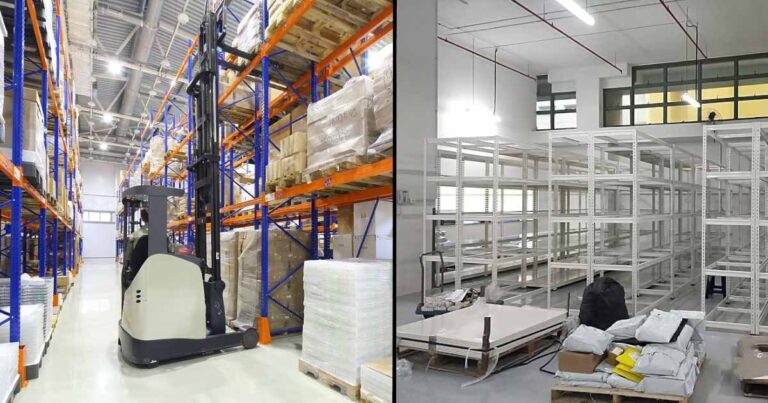
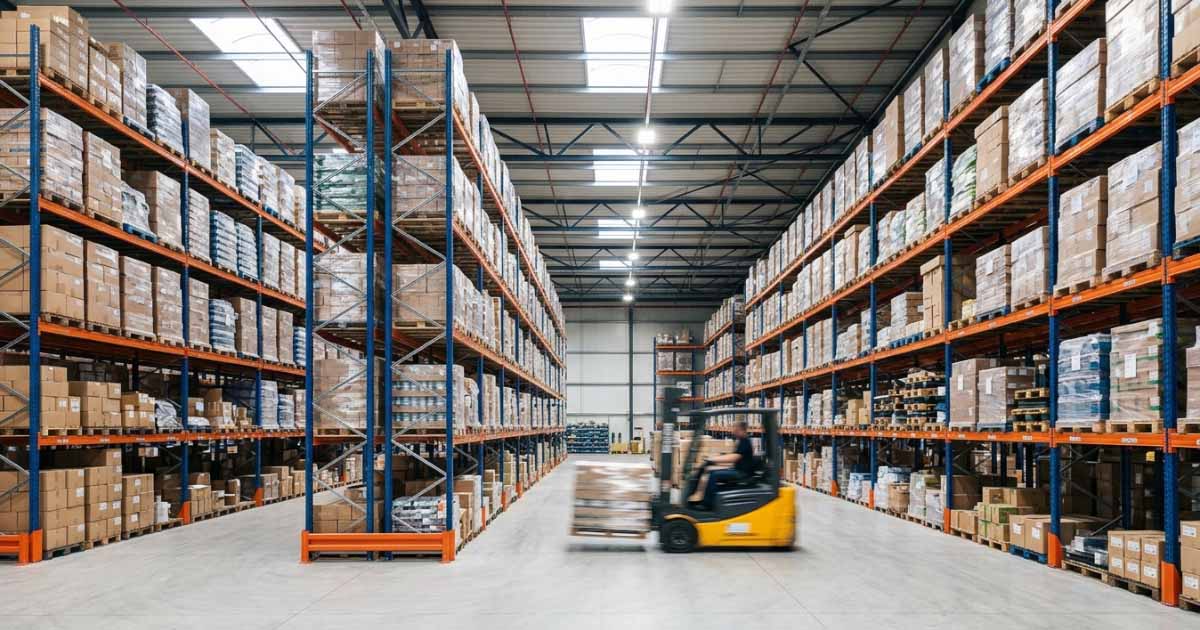
Consider a hypothetical 3PL warehouse handling inventory for several different clients at once. With many different SKUs moving at different speeds and frequent, mixed picking throughout the day, selective pallet racking tends to be the better fit, since every pallet stays directly accessible from the aisle. The wider aisles this requires also make it easier for multiple forklifts to operate without regularly blocking one another.
What Racking Works Best for E-commerce Fulfilment?
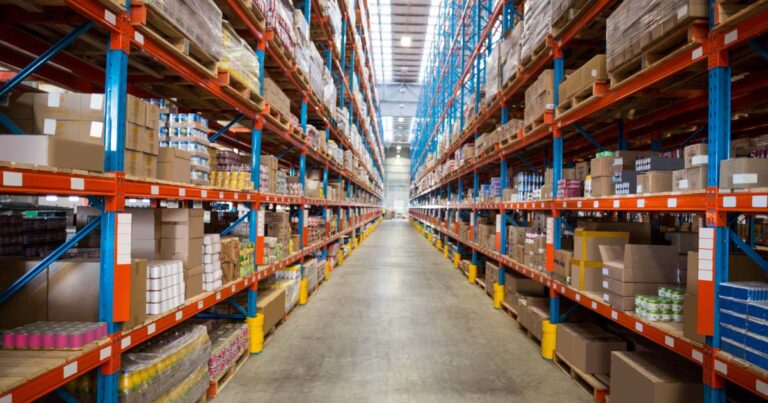
Picture an e-commerce fulfilment operation picking a high number of small, frequent orders across a wide product range. High SKU velocity and constant picking activity again point toward selective racking, since staff need to reach specific items quickly without shifting other stock out of the way first. Throughput here is driven by order volume rather than bulk movement, so accessibility usually matters more than squeezing in maximum storage density.
Which Racking System Suits Cold Storage Facilities?
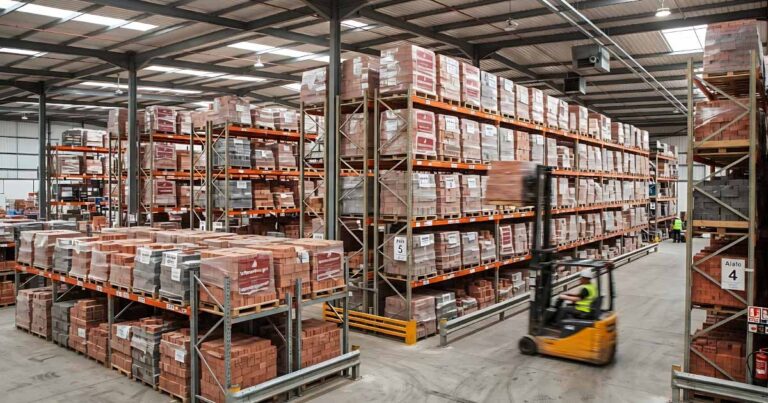
Now consider a cold storage warehouse holding large quantities of a narrower range of products. Here, drive-in racking often works better, since removing most of the aisles between rows increases how much can be stored in the same refrigerated footprint. A smaller cooled area to maintain can help manage running costs, which matters more in cold storage than in a general warehouse. SKU velocity tends to be lower here, with fewer product lines moving in bulk rather than many lines moving individually.
What Should Manufacturing Warehouses Consider for Racking?
A manufacturing site storing raw materials or bulk components follows a similar pattern to cold storage. Throughput is often driven by large, scheduled deliveries rather than constant small picks, and the product range is usually narrower. Drive-in racking or cantilever racking for long materials can suit this well, while selective racking may still make sense for finished goods or spare parts that need more frequent, individual access.
How Long Does Warehouse Racking Installation Take?
Installation time depends heavily on the size of the warehouse and the complexity of the racking chosen. A straightforward selective racking layout in a small space generally installs faster than a large drive-in system or one combined with a mezzanine floor. Rather than relying on a general timeframe, it is best to ask a supplier for a project specific schedule once your layout and racking type have been decided.
How Much Does a Warehouse Racking System Cost in Singapore?
Cost follows a similar pattern. Selective racking is usually cheaper to build per pallet position but needs more floor space, while denser systems like drive-in racking cost more upfront but can lower the effective cost per pallet stored in a smaller footprint. Business type influences which trade off makes more sense, but an accurate figure still depends on your specific warehouse and should come from a supplier quote.
Conclusion
There is no single best warehouse racking system for every business, only the system that best matches a warehouse’s SKU velocity, throughput, and available aisle space. Comparing options against your own operation, rather than assuming what worked for another business will work for yours, remains the most reliable way to choose. If you would like help matching a racking system to your warehouse, contact Gold Wind Engineering for a consultation.
Frequently Asked Questions (FAQ)
What is the difference between SKU velocity and throughput?
SKU velocity refers to how quickly an individual product moves in and out of storage, while throughput describes the overall volume of goods passing through the whole warehouse. A business can have high throughput with low SKU velocity, for example if it moves large quantities of just a few products, as is common in cold storage.
Can a warehouse use more than one type of racking system at the same time?
Yes, and it is common in practice. A warehouse might use selective pallet racking for fast moving finished goods alongside drive-in racking for bulk raw materials in the same facility. Combining systems lets each storage zone match its own SKU velocity and throughput rather than forcing one layout to suit everything.
Is there a single racking system that works well for every business type?
Not really. Every racking type involves trade-offs between accessibility and storage density, so a system that suits one business type often performs poorly for another. Matching the racking type to a warehouse’s actual SKU velocity, throughput, and available aisle width tends to work better than assuming one system fits every situation.
Where can you find a warehouse racking system supplier in Singapore?
Several established warehouse racking system suppliers operate in Singapore, ranging from companies offering standard catalogue racking to those that also handle custom fabrication and installation. Gold Wind Engineering is one such supplier, offering racking, automation, and fabrication services locally, and can be contacted directly for a consultation on your specific requirements.
Can a racking system be changed later as a business grows?
Yes, in many cases. Modular racking components can often be reconfigured, extended, or relocated as a warehouse’s SKU range or throughput changes, rather than requiring a complete replacement. How easily this can be done depends on the racking type and how the original system was designed and installed.