Automated vs Manual Warehouse Racking Systems: What’s the Difference?
Warehouse racking does not have to mean forklifts and manual picking anymore, but automation is not automatically the right answer either. A warehouse racking system can be entirely manual, partly automated, or fully automated, and each approach suits a different combination of order volume, budget, and warehouse layout. This guide explains the practical differences before you decide which direction fits your business.
What Is the Difference Between a Manual and an Automated Warehouse Racking System?
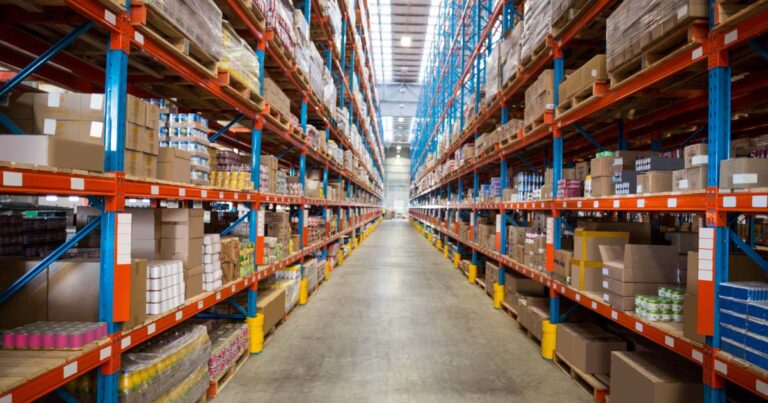
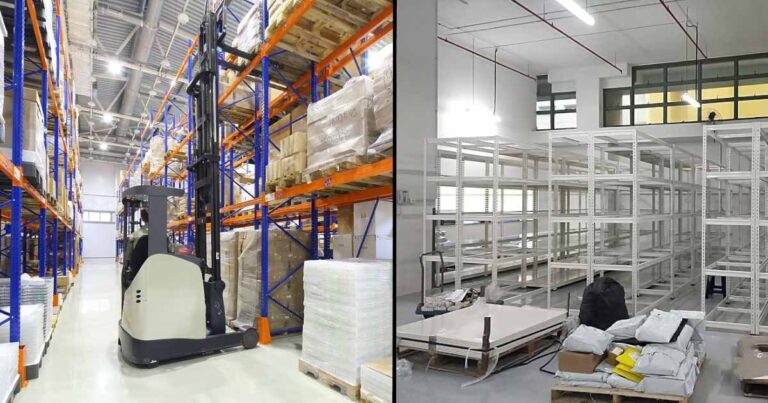
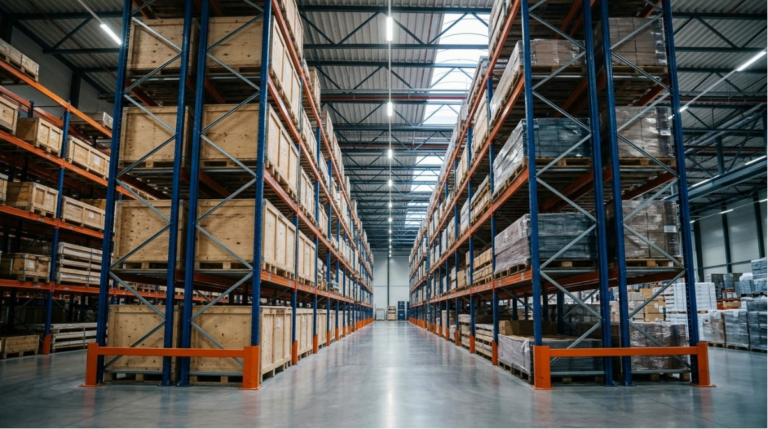
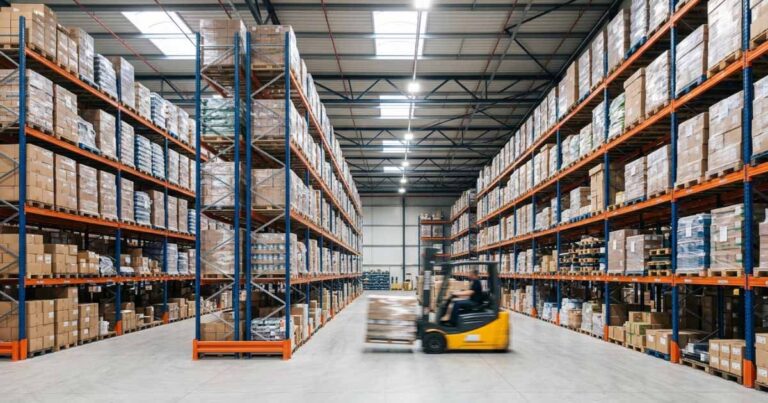
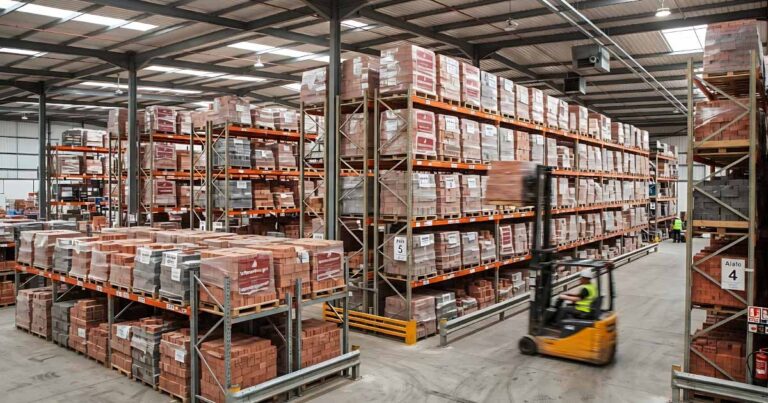
A manual warehouse racking system, such as Selective Pallet Racking, relies on forklifts and staff to load, retrieve, and move pallets. An automated system uses powered equipment such as shuttles, vertical lift modules, or guided vehicles to carry out some or all of that movement, often with far less direct human handling. Many warehouses use a mix of both rather than choosing one exclusively.
How Does Throughput Differ Between Manual and Automated Racking Systems?
In a manual system, throughput is tied closely to how many staff and forklifts are working at once, since each pallet movement depends on a person walking or driving to the location, retrieving the item, and returning. This has a real advantage during busy or seasonal periods, since throughput can often be increased quickly by adding more staff or forklift shifts, without waiting on equipment or software changes. Automated systems, on the other hand, can move goods faster and more consistently once installed, since equipment can operate continuously and retrieve items without walking aisles. Gold Wind Engineering’s Skylift System, for example, is designed so a single operator can retrieve a stored pallet in around a minute using a vertical lift mechanism, rather than physically travelling to a storage location.
How Does Automation Affect Labour Dependency in a Warehouse?
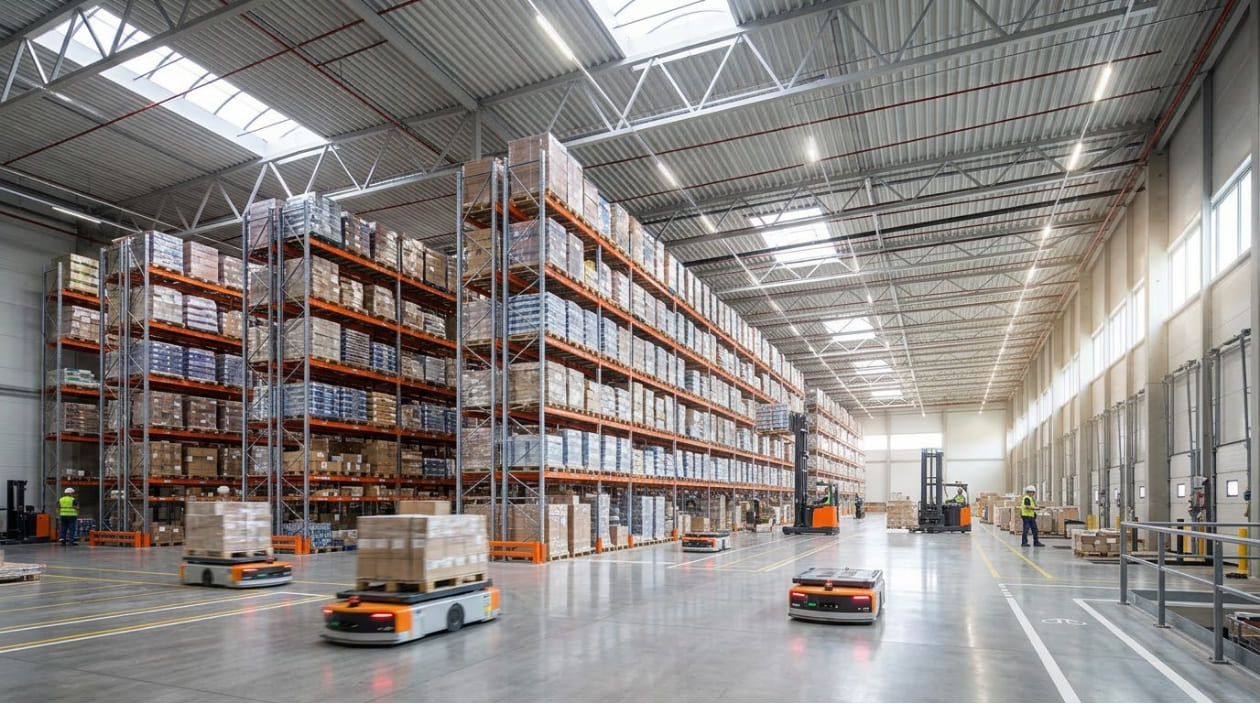
Automated equipment such as an Automated Guided Vehicle can move goods between storage, production, and picking areas without an onboard driver, which reduces the manual transport work involved. Most automated systems still need operators for monitoring, exception handling, and maintenance, so labour dependency is reduced rather than removed completely. A manual system, meanwhile, relies more on staff, but that staff can be redeployed to other tasks during quieter periods, hired or scaled seasonally without a large capital commitment, and does not require specialised technical skills to operate, which is a genuine advantage for businesses with variable or uncertain demand.
How Does Setup Complexity Compare Between Manual and Automated Racking?
A manual warehouse racking system is largely a structural installation, so it tends to be quicker to plan, install, and later reconfigure or expand if your layout or storage needs change. This makes it a lower-risk option for businesses on shorter leases or those still working out their long-term storage needs. Automated systems usually involve additional engineering, control software, and sometimes structural or electrical work to support the equipment, which adds time and complexity to the project, but that upfront planning is what allows the system to run with less day-to-day manual handling once it is in place.
When Does an Automated Warehouse Racking System Make Sense for Your Business?
Automation tends to make more sense for warehouses with high order volumes, a large or growing SKU range, limited floor space relative to ceiling height, or rising labour costs that are starting to affect picking efficiency. A manual warehouse racking system holds its own value in other situations: it suits businesses storing irregular or oversized goods that do not move easily through automated equipment, operations on shorter leases that need to avoid a large fixed investment, and warehouses where demand is still too uncertain to justify designing around one fixed process. A common approach is to automate the busiest part of the warehouse first, such as fast moving stock, while keeping manual racking for everything else, and expand automation later only once the results justify it.
How Much Does a Warehouse Racking System Cost in Singapore?
Cost depends heavily on whether the system is manual or automated. A manual warehouse racking system is generally the lower cost, faster to install option, since it does not require control software, specialised equipment, or ongoing system maintenance beyond the physical structure. An automated system involves a larger upfront investment due to the equipment, integration, and installation work involved, though it can reduce picking labour needs over time for the right kind of operation. Because the final cost depends on warehouse size, equipment chosen, and project scope, an accurate figure should come from a supplier quote rather than a general estimate.
Why Choose Gold Wind Engineering for Manual or Automated Warehouse Racking?
We supply and install both manual racking systems and automation solutions, including shuttle, vertical lift, and guided vehicle equipment, so we are not limited to recommending one approach regardless of what your warehouse actually needs. Singapore has several warehouse racking system suppliers, and we assess your order volume, SKU range, and budget before recommending a manual, automated, or mixed setup, rather than defaulting to the most expensive or most familiar option.
Conclusion
Choosing between a manual and an automated warehouse racking system comes down to your actual order volume, labour costs, and budget, not whether automation sounds more advanced. If you are weighing the two options for your warehouse, contact Gold Wind Engineering for a site assessment.
Frequently Asked Questions (FAQ)
Can a manual warehouse racking system be upgraded to an automated one later?
In many cases, yes, particularly if the original layout allows for it. Adding automation later is often more involved than planning for it upfront, since structural, electrical, or layout changes may be needed, so it helps to mention future automation plans when a system is first designed.
What is the difference between semi-automated and fully automated warehouse racking?
Semi-automated racking combines manual labour with some powered equipment, such as a mobile shelving system or a single automated unit, while staff still handle picking and transport. Fully automated systems handle most movement and retrieval with minimal direct handling, though they still need operators for monitoring and exceptions.
Can a warehouse use automated and manual racking systems together?
Yes, this is common in practice. A warehouse might automate its fastest moving stock with equipment such as a vertical lift or shuttle system, while keeping manual racking for bulk, irregular, or lower turnover items, rather than automating the entire warehouse racking system at once.
Is an automated warehouse racking system worth it for a small or growing SME in Singapore?
It depends on order volume and growth plans rather than business size alone. Many SMEs start with a manual warehouse racking system and automate specific areas, such as fast moving stock, once volume and labour costs justify the investment, rather than automating everything from the start.
Where can I get both manual and automated warehouse racking systems in Singapore?
We supply and install both manual racking and automation solutions for warehouses across Singapore. Contact us to discuss your order volume, layout, and budget, and we can advise on whether a manual, automated, or mixed warehouse racking system fits your operation.