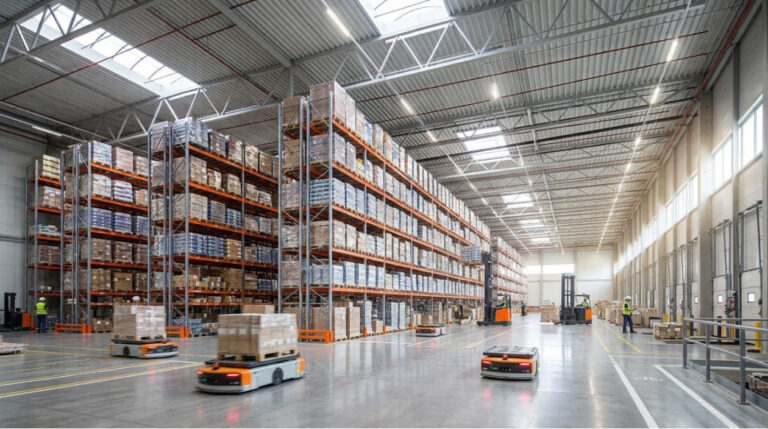
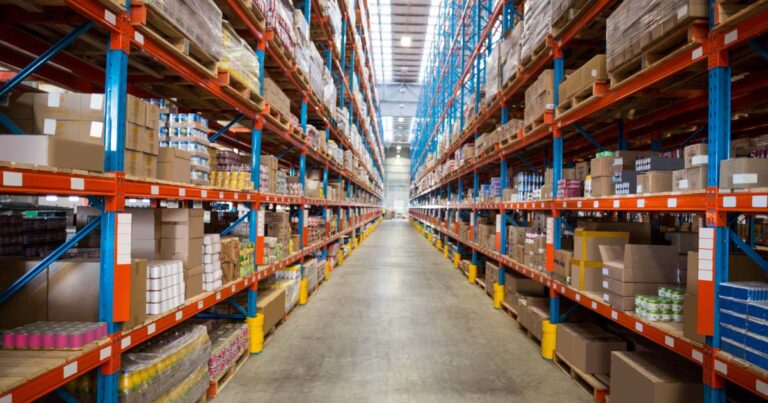
5 Common Pallet Racking Mistakes Singapore Warehouses Make (and How to Avoid Them)
Most pallet racking problems in Singapore warehouses do not come from faulty equipment. They come from decisions made before or during installation that seemed reasonable at the time but create real cost, safety, or efficiency issues later. Here are five mistakes that show up repeatedly, what they can lead to, and how to avoid them.
Mistake 1: Is Your Aisle Width Too Narrow for Your Forklift?
Aisle width should be set by the forklift actually used, not guessed or copied from another warehouse. Counterbalance trucks generally need aisles of roughly 3.2 to 3.5 metres, reach trucks need around 2.6 to 2.9 metres, and very narrow aisle trucks can operate in aisles as tight as 1.5 to 1.8 metres, but only with the matching specialised equipment. Getting this wrong means forklifts cannot manoeuvre safely, which leads to damaged racking, damaged stock, or a layout that has to be redone. Confirm your forklift type and turning requirements before the racking layout is finalised, not after.
Mistake 2: Does Your Racking Type Match Your SKU Velocity?
Choosing a racking type because it worked at another site, rather than based on your own stock, is one of the most common mistakes. Selective Pallet Racking suits most SKU counts and rotation needs, while Drive-In Racking is generally last-in, first-out, which makes it a poor fit for stock that must rotate by age unless it is a drive-through layout. Getting this mismatched means either picking inefficiency from racking that is too dense, or wasted floor space and cost from racking that is too accessible for what is actually bulk, slow-moving stock.
Mistake 3: Have You Checked Floor Loading Before Installing Pallet Racking?
Pallet racking concentrates weight onto small base plates rather than spreading it evenly, so a tall bay of heavy pallets can exceed a floor’s rating even when the average load across the warehouse looks acceptable. This matters more in older industrial buildings, which can have a lower floor rating than newer ones. Skipping this check risks floor cracking or structural failure under load. Have the floor’s load capacity checked against the racking’s base plate loads before frame heights are finalised, not after installation.
Mistake 4: Are You Skipping Regular Pallet Racking Inspections?
Pallet racking takes constant wear from forklift traffic, and damage such as a bent upright or dented beam is not always obvious at a glance. Good practice generally involves regular visual checks by warehouse staff, with a more thorough inspection carried out periodically by a competent person, more often if forklift traffic is heavy or damage has occurred before. Skipping this means damage can go unnoticed until it affects the structure’s capacity, risking collapse and the stock or staff near it.
Mistake 5: Did You Install Your Pallet Racking Without a Qualified Installer?
Installing pallet racking without a qualified installer risks uprights that are not properly plumb, level, or anchored, which undermines the system’s rated capacity even if every individual part is correct. It can also void the manufacturer’s warranty, since most racking warranties assume installation by trained professionals. If your layout or load requirements change later, an unqualified reinstallation carries the same risks again. A qualified installer should set up and sign off on the racking before it is loaded.
How Do I Choose the Right Pallet Racking System for My Warehouse?
Avoiding these five mistakes is largely how you choose the right system in the first place. Start with your actual forklift and aisle requirements, match the racking type to how your SKUs actually move, confirm floor loading before frame heights are set, and plan for regular inspections and qualified installation from the beginning rather than treating them as optional extras once the racking is in place.
Why Work With Gold Wind Engineering for Pallet Racking in Singapore?
We supply, design, and install pallet racking systems for warehouses across Singapore, and we factor in aisle width, SKU velocity, and floor loading as part of the design process for each project. Singapore has several warehouse racking system suppliers, and we aim to get this groundwork right from the start of a project.
Conclusion
Most pallet racking mistakes are avoidable once you know what to check before installation, not after. If you want a second opinion on your current racking or a new installation, contact Gold Wind Engineering for a site assessment.
Frequently Asked Questions (FAQ)
Can damaged pallet racking be repaired, or does it need to be replaced?
It depends on the type and extent of the damage. Minor dents on a beam or frame may sometimes be repaired or the component replaced individually, but a bent or twisted upright generally should not be straightened and reused, since this can hide a loss of structural strength.
Does overloading one pallet position affect the rest of the pallet racking structure?
It can. Pallet racking is a connected structure, so excess weight on one position can place additional stress on the surrounding frame and bracing, not just that single level. This is one reason load capacity should be respected at every position, not only treated as a per pallet limit.
How do I know if my current pallet racking already has one of these mistakes?
Signs include forklifts struggling to manoeuvre in the aisles, visible bends or dents on beams and uprights, or racking that was installed without engineering drawings or sign off. If any of this sounds familiar, a site assessment can confirm whether your current pallet racking is safe as installed.
Can mixing different racking types in one warehouse help avoid SKU velocity mismatches?
Yes, this is common in practice. A warehouse might use selective pallet racking for fast moving, mixed SKUs while using a denser system for bulk or slower moving stock, rather than forcing one racking type to suit every part of the operation.
Does Gold Wind Engineering assess pallet racking that was installed by another supplier?
Yes, we can assess existing pallet racking as part of a site visit, regardless of who originally installed it. This generally covers checking for visible damage, confirming the layout against your current stock and equipment, and advising on next steps where needed.